
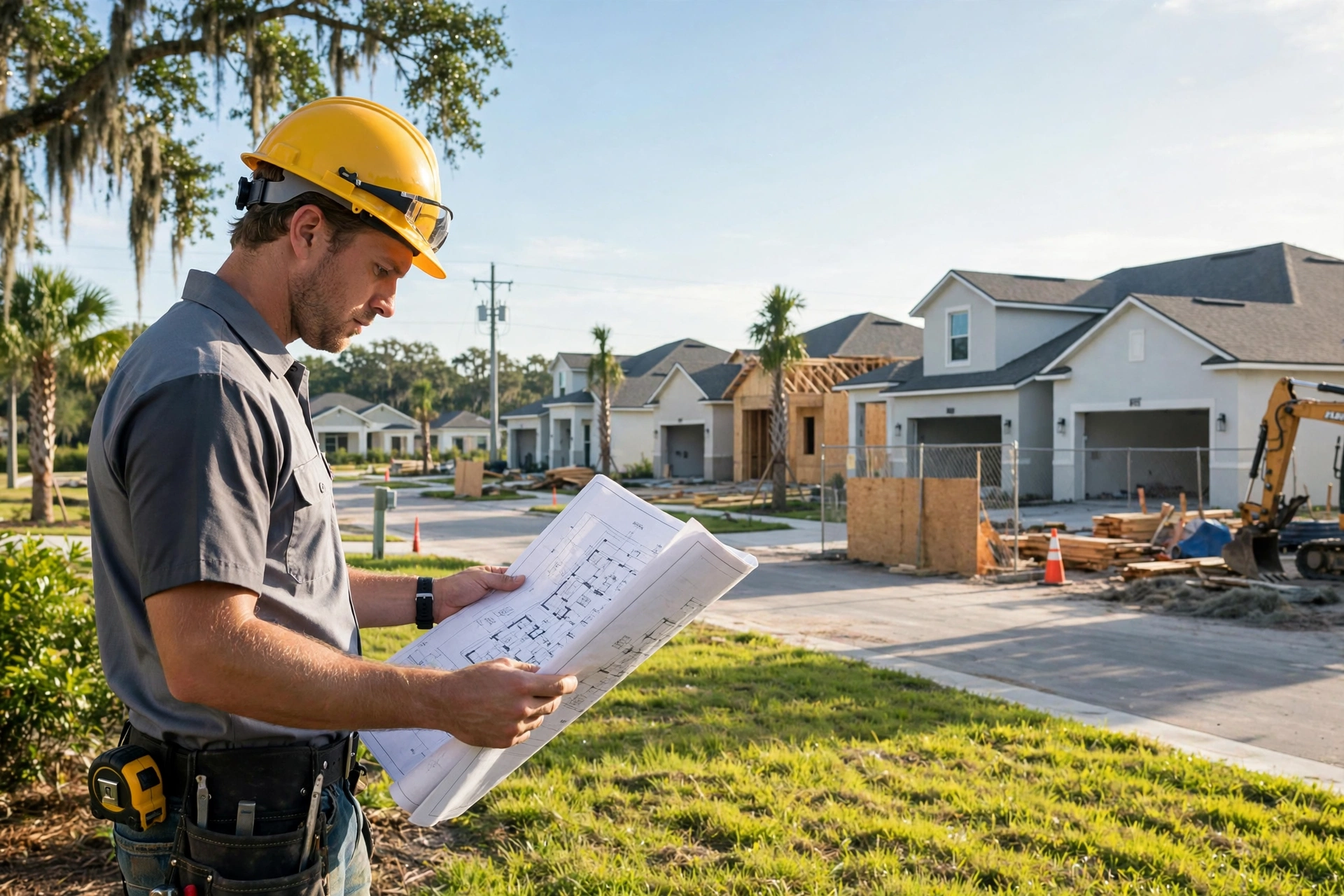

Builders just sent one of the clearest warning signals the housing market has produced in more than a decade. Home builder sentiment fell three points to 29 in October, the lowest reading since June 2012, in the National Association of Home Builders and Wells Fargo Housing Market Index released today. Economists expected 31. Instead, buyer traffic collapsed and builders reported cutting prices at the highest share of this cycle.
If you are thinking about buying or selling, this report matters. Builders see traffic weeks before contracts show up in official data, and they decide today how much supply will exist next year.
Home Builder Sentiment Fell to 29 in October
The headline index fell from 32 in September to 29. Any reading below 50 means more builders view conditions as poor than good, and this index has now stayed below 40 for 18 straight months. All three parts fell. Current sales conditions dropped to 33. Future sales expectations dropped five points to 32. Buyer traffic dropped five points to 18, the lowest since April 2012 outside the first month of the pandemic.
NAHB Chairman Bill Owens pointed to borrowing costs first. Mortgage rates have climbed well above 7 percent in recent weeks, and higher gas prices and inflation have weakened buyer traffic across much of the country. Freddie Mac put the average 30 year fixed rate at 7.40 percent last week, the highest level in nearly three years, a level we broke down in our guide to mortgage rates at 7.40 percent and whether to buy now or wait. NAHB Chief Economist Robert Dietz said demand still exists, but higher rates, elevated costs, and weaker consumer confidence are keeping more buyers on the sidelines. The regional picture was weak almost everywhere. The Midwest fell three points to 40 and stayed the relative bright spot, while the West fell to 26, the lowest regional reading.
Why Builders Are Cutting Prices So Fast
The most useful number in the report for buyers is not the headline index. It is what builders are doing with price. In October, 43 percent of builders cut prices, the highest share in the period from 2020 to 2026 covered by NAHB. The average price cut stayed at 6 percent for the seventh straight month. And 65 percent of builders used sales incentives, the 19th straight month in which at least 60 percent have done so.
That combination tells a clear story. Builders would rather give money back through a lower price, a rate buydown, closing cost help, or included upgrades than sit on finished homes that cost them interest every month. A 6 percent cut on a 450,000 dollar new home is 27,000 dollars, and it often comes on top of incentives that reduce the monthly payment.
Why the urgency? Builders face higher costs for construction loans, building materials, and diesel, plus worsening labor and lot conditions. More than one third reported immigration enforcement activity in their market areas in the past month, causing delays and keeping some workers off job sites. Hot inflation still pressures the whole chain, as we explained after September CPI hit 3.7 percent. When costs stay high and buyers pull back, builders protect cash flow by moving the homes they have already started, even if that means giving up margin.
What This Means If You Want to Buy a New Home
Weak sentiment is bad news for builders, but it can create leverage for a prepared buyer. When 43 percent cut prices and nearly two thirds offer incentives, the list price is a starting point, not the final answer. Ask what the builder will do on price, on a rate buydown, on closing costs, and on upgrades, and get every promise in writing. Compare total monthly payment and total cash to close across at least three communities.
Timing still matters. A price cut does not make an unaffordable payment affordable. At a 7.40 percent rate, the payment on a 400,000 dollar loan is about 2,768 dollars a month before taxes and insurance. Run your numbers at the rate you actually qualify for, include taxes, homeowners insurance, and association dues, and leave room in your budget after the payment. In Florida especially, insurance and tax costs can change the real cost of a home far more than a small move in the loan rate.
There is also a supply warning here. Future sales expectations at 32 suggest builders will start fewer homes ahead. Fewer starts today mean fewer finished homes next year, which can support prices later even while buyers have leverage now. The smart move is rarely to wait for a perfect market. It is to buy when the numbers work for your household and the builder is motivated.
What This Means If You Own or Plan to Sell
If you plan to sell, builder price cuts are now part of your competition. A buyer will compare your price with a discounted new build that may include a rate buydown and a warranty. Price against that reality from day one instead of testing a high price and chasing the market down later. Condition and presentation matter more when buyers have choices.
If you own and plan to stay, this report is not a reason to panic. Dietz noted that demand persists. The problem is affordability at current rates, not a collapse in the desire to own. A national index at 29 tells you new construction is stressed. It does not tell you that every local market will fall, and in areas with tight supply it may point to tighter inventory ahead.
The Lesson Behind the 14 Year Low
After 20 years in real estate and 21 years in insurance, the pattern I watch for is this one. The people closest to a market tell you the truth through their actions first. Builders are speaking both ways right now. Their survey says conditions are the worst since 2012, and their behavior confirms it, with price cuts at the highest share of this cycle.
For households, the lesson is to negotiate from evidence, not from hope. Hope says wait until rates and prices fall at the same time, a combination that rarely arrives because lower rates bring buyers back and lift prices. Evidence says builders need buyers today, and buyers with a solid down payment and a stable budget have leverage today. Less noise and more clarity means using the data in front of you.
Your concrete move this week is simple. If you are shopping, visit two builder communities, ask each for its price cuts and incentives in writing, and compare the full monthly cost before you offer. If you are selling, pull new construction prices near your home and price with those numbers in view. For a broader map of prices, rates, and strategy, visit the Real Estate Hub.
Take Action Today
Want a clear plan for your savings, your spending, and your next money moves? Download Unlocked Vol 2, our free 18 page Financial Freedom Playbook, and get practical steps you can use this week to build real momentum toward financial freedom.