
Learning how to file homestead exemption in Broward County is one of the highest value hours a new homeowner can spend this winter. The filing is free, you file it once, and it lowers the taxable value of your home every year you live there. Yet every year owners who bought a home or moved within Florida leave real money with the county because a form felt confusing. It is not confusing once you see the steps in order.
Broward is already taking applications for the 2027 tax year, and the timely filing window runs through Monday, March 1, 2027. If you owned your home and lived in it as your permanent residence on January 1, 2027, this is your window. Our Florida Homeownership Costs hub tracks this filing alongside insurance, flood and tax costs, because the exemption only helps owners who actually claim it.
How to file homestead exemption in Broward County and who qualifies
You qualify when three things are true on January 1 of the tax year. You own the home, in your own name or through a qualifying trust or cooperative lease. You live in the home as your permanent residence, not as a rental or a second home. And you are a legal Florida resident. Homes, condominiums and cooperative apartments can all qualify when they are the place you truly live.
One household gets one exemption. If you or your spouse claim a homestead benefit on another property in any county or any state, that other benefit has to end before Broward can grant yours. Owners who moved from another Florida home should also ask about portability when they file, because Florida lets you transfer part of the assessment benefit from your old homestead to the new one. Renters cannot file, and if you bought late in 2026, do not assume the seller exemption became yours. A new owner files a new application.
The documents Broward asks for
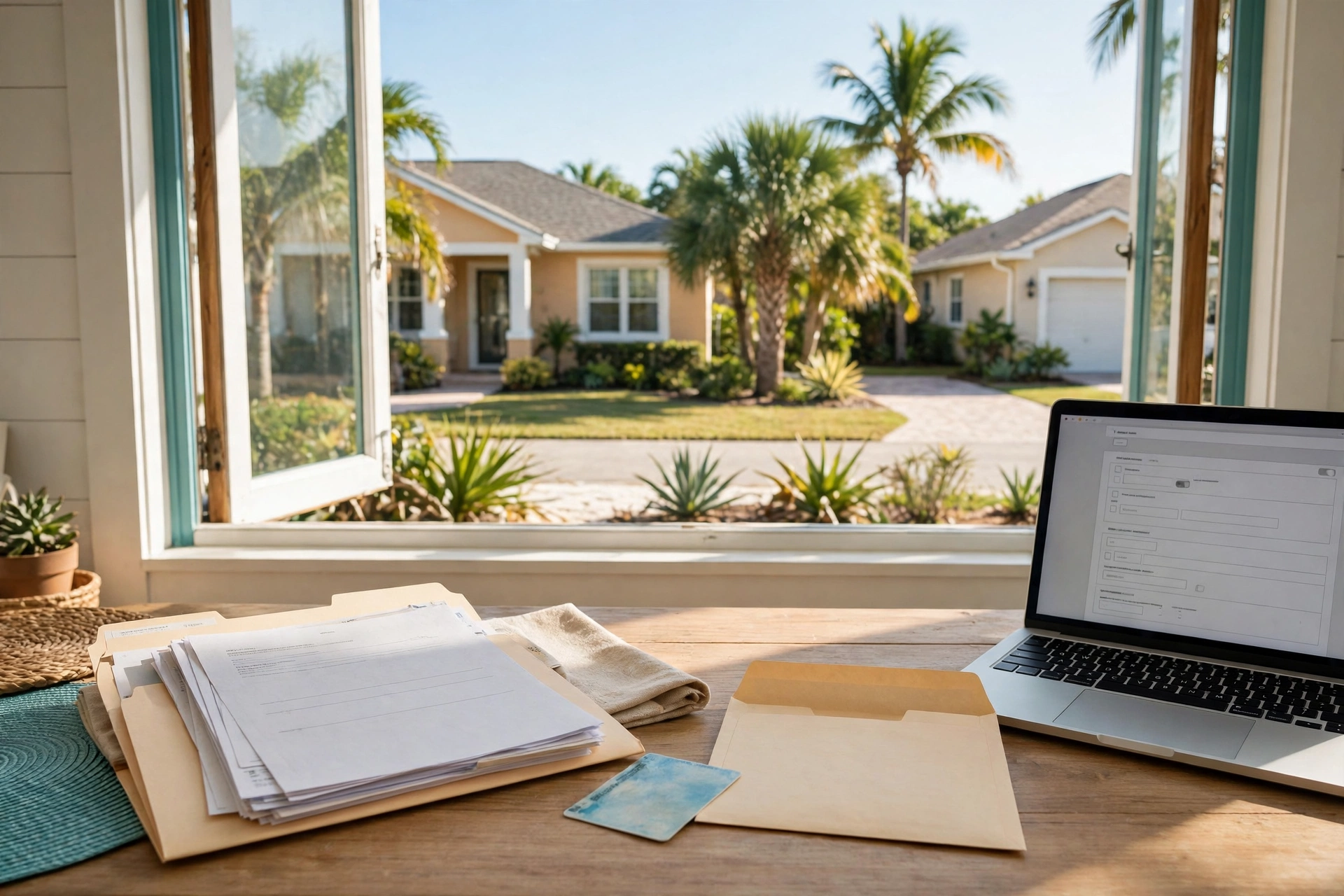
Gather your papers first and the filing takes minutes instead of days. Broward asks for proof of ownership. In most cases the recorded deed is already in the county records, so you do not need a copy. If the home is held in a trust, you will need a notarized certificate of trust or a complete copy of the trust agreement.
Next comes proof of permanent Florida residence, and this part is strict. Every applicant needs a Florida driver license, or a Florida identification card if you do not drive. Anyone moving from another state must surrender the old license when Florida issues the new one. On top of that license, Broward asks for one more item: either a Florida voter registration or a power or water utility bill for the property in at least one owner name.
You will also enter Social Security numbers for all owners living on the property and for a spouse. Owners who are not United States citizens need proof of permanent residency or other qualifying status as well. Check that the address on your license matches the home you are claiming, because a license that still shows an old address is the most common reason an application stalls.
File online, in person or at a mobile event
The fastest route is the online filing on the Broward County Property Appraiser site at bcpa dot net. Open the homestead page, choose the online filing for 2027 and work through the state application form it presents. Enter owner names exactly as they appear on the deed, add the residence and document details from your folder, review every entry once before you submit and save the confirmation the system gives you. A saved confirmation is your proof that the county received the filing.
Paper routes still work. You can file at the Property Appraiser office or at one of the Mobile Exemption Education Team events held around Broward County, which suit owners with trust or portability questions. Whichever route you choose, file well before March 1.
If you miss March 1, Broward lists an absolute late filing deadline of September 20, 2027 for the 2027 tax year, and state law allows no filing at all after that date for that year. Treat March 1 as the real deadline and September as an emergency exit only.
What the exemption saves and what Amendment 3 adds
The standard exemption lowers taxable value in two parts. The first 25,000 dollars of assessed value is exempt from all property taxes, including school taxes. An additional amount applies to assessed value above 50,000 dollars, and that second part does not apply to school taxes. Broward estimates the standard exemption saves a typical owner roughly 673 dollars to 1,020 dollars a year depending on the city tax rate, and the Save Our Homes cap that comes with homestead status can save far more over time by limiting how fast your assessed value can rise each year. Our guide on how to calculate your homestead exemption savings shows the math on a sample home.
Amendment 3, which Florida voters passed on November 3, 2026, raises the stakes for filing on time. It lifts the homestead exemption for non school property taxes to 150,000 dollars in 2027 and 250,000 dollars in 2028, adjusted for inflation after that, while school taxes stay unchanged. It also lowers the annual cap on assessment increases for non homestead property from 10 percent to 5 percent. Anyone who was not a Florida resident on December 31, 2026 receives the current exemption first and the increased exemption beginning with their fifth year of homestead. None of that larger relief reaches an owner who never filed, which is why our Florida homestead exemption 2027 guide puts the filing itself first.
Paul has publicly called for abolishing the property tax burden on homeowners since 2023, starting with his November 25, 2023 post Read the original post and continuing through his October 19, 2026 reshare, Read the original post. Amendment 3 is the first real step on a Florida ballot toward what he has advocated for three years, and filing your exemption is how you claim your share of it. If you are also shopping for a home in Broward this season, a local broker who knows these deadlines, like the team at Sunset Realty, can flag the filing window at closing before it slips past you.
After you file, protect the exemption
Once approved, the exemption renews automatically each year while you keep the home as your permanent residence. Broward sends a renewal receipt, and if it never arrives, contact the Property Appraiser so a mailing problem does not quietly cost you the exemption. Tell the county when life changes, because a move, a rental conversion or a change in ownership can end eligibility, and claiming an exemption you no longer qualify for brings penalties.
Do this task this week. Check your license address, pull your utility bill or voter registration, and submit the filing while the portal is quiet. Want a wider plan for lowering the cost of owning a Florida home? Download our free ebook at Unlocking Financial Freedom and use its steps to cut one major household cost at a time, starting with the taxes on the home you already own.